Medically Reviewed by Dr. Rebecca MacMillan, BVetMed MRCVS
Last Updated: December 2025
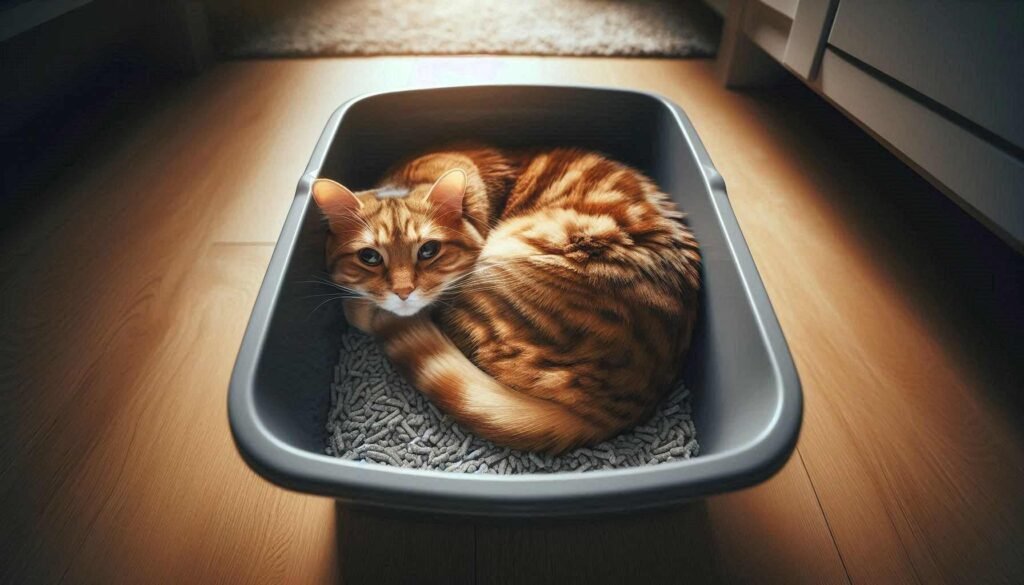
Finding your cat sleeping in litter box is alarming. Cats are obsessively clean creatures, so when you discover your feline friend napping in what’s essentially their toilet, your concern is totally justified. While cat sleeping in litter box behavior might occasionally be harmless, it’s usually a red flag that something’s wrong—either medically or behaviorally.
In this vet-reviewed guide, we’ll explore why cat sleeping in litter box happens, the 6 most common causes, and exactly what you should do about this worrying cat litter box behavior.
Is Cat Sleeping in Litter Box Normal?
Here’s the thing—no, cat sleeping in litter box is not normal behavior. According to Dr. Rebecca MacMillan, a qualified veterinary surgeon, “Cats are usually spotless animals and are good at separating their toileting and rest areas. So it is considered odd if your cat starts to sleep in his litter box.”
While kittens might occasionally doze off in their litter box while still learning appropriate bathroom habits, adult cats choosing the litter box over their cozy bed signals an underlying issue. This cat behavior problem requires attention, not dismissal as “just quirky.”
Cat Sleeping in Litter Box: 6 Common Reasons
1. Medical Issues (Urinary Tract Problems)

This is the most serious reason for cat sleeping in litter box behavior. According to Dr. Meaghan Thomas, DVM at East Ridge Animal Hospital, medical conditions like UTIs, bladder stones, and urinary blockages can drive cats to lie in their litter box.
Common urinary issues causing this litter box behavior:
- Urinary tract infections (UTIs)
- Feline lower urinary tract disease (FLUTD)
- Bladder or kidney stones
- Urinary blockage (medical emergency!)
When cats have constant urges to urinate or associate the litter box with pain relief, staying close makes sense to them. Male cats are particularly prone to urinary blockages, which are life-threatening. Similar to how cats exhibit distress through other behaviors, litter box sleeping is a sign of distress.
2. Stress and Anxiety

Certified cat behaviorist Amelia Wieber explains that when tensions are high, cats often retreat to hide in areas that feel familiar and secure. The litter box, especially if covered, becomes a haven during stressful times.
Common stressors causing cat litter box sleeping:
- New pets in the household
- Moving to a new home
- Loud noises (construction, storms, fireworks)
- Changes in daily routine
- Loss of a family member or pet
The enclosed space with familiar smells is comforting to a stressed cat. Just like proper kitten training reduces anxiety, addressing environmental stressors helps adult cats, too.
3. Mobility Issues and Arthritis
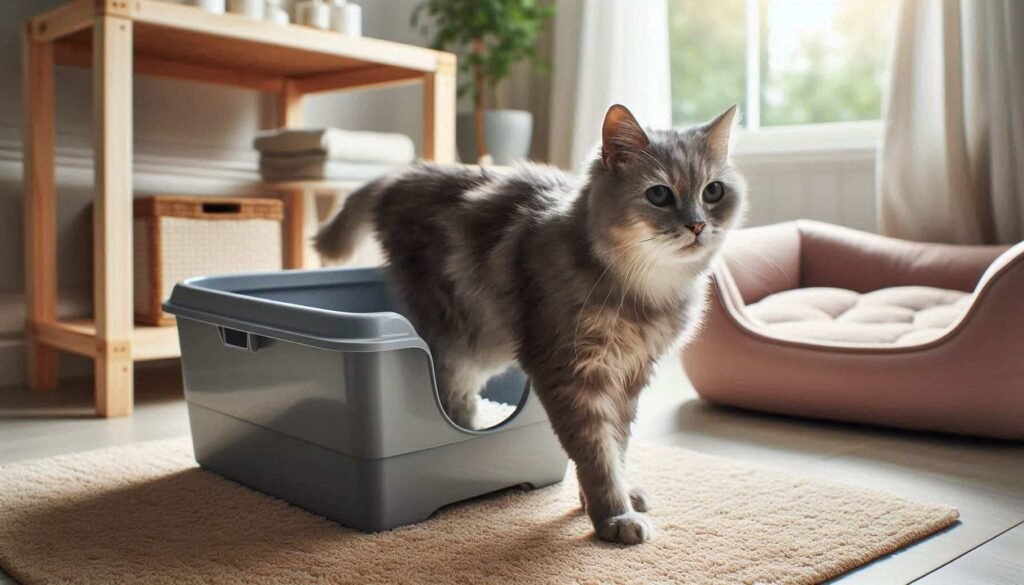
Older cats suffering from arthritis or joint pain may find it difficult to climb out of their litter box. Dr. MacMillan notes that mobility issues, especially osteoarthritis, can slow down senior cats, making the litter box an unintended resting spot.
If your elderly cat is cat sleeping in litter box, they might simply be stuck or too tired to climb out. This painful cat behavior requires veterinary intervention.
4. Territorial Behavior (Multi-Cat Households)
In homes with multiple cats, a cat sleeping in a litter box can be about claiming territory. Cats may guard the litter box to prevent other cats from using it, especially when competition for resources is intense.
According to veterinary behaviorists, cats are naturally territorial, and the litter box represents a zone of control. This cat litter box behavior is more common when you don’t have enough boxes—the golden rule is one litter box per cat plus one extra.
5. Cognitive Decline in Senior Cats
Older cats experiencing cognitive dysfunction may sleep in odd places, including their litter box. This cognitive decline causes forgetfulness, routine changes, and confusion—making cats sleep in unusual locations.
6. Pregnancy (For Female Cats)
Pregnant cats seeking a private, protected place to give birth might choose the litter box. According to veterinary experts, expectant mothers look for quiet areas away from household noise, and the litter box fits the bill—though it’s not ideal for birthing.
When Cat Sleeping in Litter Box Requires Emergency Care
Seek immediate veterinary attention if you notice:
- Straining to urinate without producing urine (EMERGENCY!)
- Blood in urine or litter
- Vomiting or lethargy
- Crying or vocalizing in pain
- Not eating or drinking
Schedule a vet visit soon if:
- Cat sleeping in litter box persists for more than 24 hours
- Behavior started suddenly
- Your cat seems uncomfortable or distressed
According to veterinary research, urinary blockage in male cats is a life-threatening condition requiring immediate attention. Never adopt a “wait and see” approach with this cat behavior.
Solutions: How to Stop Cat Sleeping in Litter Box
Solution 1: Veterinary Examination (Most Important!)
Always rule out medical causes first. Schedule a vet appointment for physical examination, urinalysis, and blood work.
Treatment depends on diagnosis:
- UTIs: Antibiotics (usually 1-week recovery)
- Crystals: Prescription diet, increased water intake
- Stones: Surgical removal, dietary management
- Arthritis: Pain medications, joint supplements
Solution 2: Reduce Environmental Stress
If your vet rules out medical issues, address potential stressors:
Create a calm environment:
- Use calming pheromone diffusers (Feliway)
- Provide multiple hiding spots
- Maintain consistent routines
- Use positive reinforcement training to build confidence
For new pet introductions:
- Gradual introductions over 1-2 weeks
- Separate feeding areas
- Multiple litter boxes
Solution 3: Improve Litter Box Setup
Optimize your litter box situation:
- Clean litter boxes daily
- Provide one box per cat plus one extra
- Use low-sided boxes for senior cats
- Place boxes in quiet, accessible locations
- Don’t change litter brands suddenly
Solution 4: Create Better Sleeping Alternatives
Make other sleeping spots more appealing:
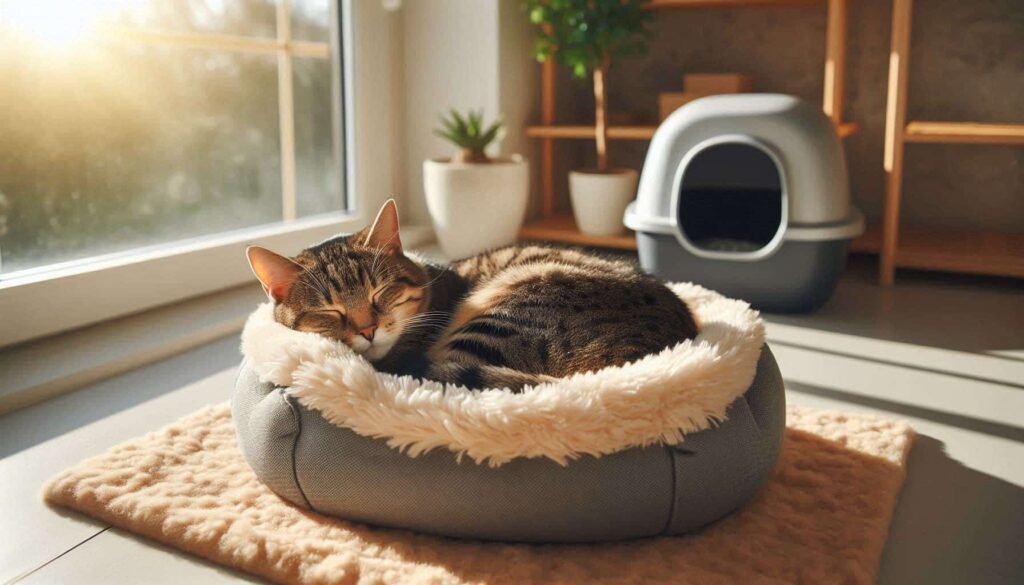
- Provide multiple cozy beds around your home
- Place beds in quiet, secure locations
- Consider heated beds for older cats
- Put beds near windows for sunny spots
- Create elevated perches for security
Solution 5: Address Mobility Issues
For senior cats with arthritis:
- Switch to low-entry litter boxes
- Place litter boxes on same floor as cat’s bed
- Add ramps or steps to favorite spots
- Discuss pain management with your vet
- Provide orthopedic bedding
Solution 6: Manage Multi-Cat Households
Reduce territorial stress:
- Follow the “n+1” rule (number of cats plus one box)
- Place boxes in different locations
- Provide multiple resources (food, water, beds)
- Create vertical spaces for escape routes
The Bottom Line: Cat Sleeping in Litter Box
Cat sleeping in litter box is not normal and usually signals a problem. The two most common causes are medical issues (especially urinary tract problems) and stress/anxiety. Since urinary blockages are life-threatening emergencies, always consult your veterinarian first to rule out health problems.
Key takeaways:
- Not normal behavior – Cats separate toileting from resting
- Medical causes most common – UTIs, stones, arthritis
- Stress is second culprit – Environmental changes trigger hiding
- See vet immediately – Rule out life-threatening conditions first
- Multiple solutions exist – Treatment depends on underlying cause
- Prevention is possible – Maintain clean boxes, reduce stress, regular vet checkups
Remember, your cat isn’t being difficult—they’re communicating distress through this cat litter box behavior. With prompt veterinary care and appropriate interventions, most cases of cat sleeping in litter box resolve completely.
Related reading: Understanding cat behaviors helps you provide better care. Check out our guides on kitten litter training fundamentals, age-appropriate kitten training, and cat communication signals.
About the Reviewer
Dr. Rebecca MacMillan, BVetMed MRCVS, is a veterinary surgeon who graduated from the Royal Veterinary College in London with extensive experience in small animal practice since 2009.
References & Authoritative Sources
- Purina – Why Is My Cat Laying in the Litter Box?
- Daily Paws – Cat Sleeping in Litter Box Expert Analysis
- Rover – Cat Laying in Litter Box Veterinary Guide
- PrettyLitter – Cat Sleeping & Laying in The Litter Box
- Catster – Why Does My Cat Lay, Sleep, or Play in the Litter Box?
Disclaimer: This article is for informational purposes only. Always consult with your veterinarian for specific concerns about your cat’s health or behavior.