Medically Reviewed by Dr. Gary Richter, DVM
Last Updated: December 2025
If you’re desperate to stop cat scratching furniture, you’re not alone. Coming home to shredded couches and destroyed chair legs is beyond frustrating. But here’s the thing—cat scratching furniture is completely normal behavior, not spite. The key isn’t stopping the scratching entirely (that’s impossible!), but redirecting this natural cat behavior to appropriate surfaces.
In this vet-reviewed guide, we’ll explore why cat scratching furniture happens and share 10 proven natural methods to protect your belongings while keeping your cat happy.
Why Do Cats Scratch Furniture?
Before learning how to stop cat scratching furniture, you need to understand why they do it. According to Dr. Gary Richter, DVM, scratching serves multiple purposes for cats.
Cats scratch furniture to:
- Sharpen claws – Removes old nail sheaths
- Mark territory – Scent glands in paws deposit pheromones
- Stretch muscles – Engages back and shoulder muscles
- Express emotions – Releases excitement or stress
- Exercise – Provides physical activity
According to veterinary behaviorists, scratching behaviors start as early as 8 weeks of age. Just like proper kitten training teaches appropriate behaviors early, redirecting scratching requires understanding your cat’s preferences and providing better alternatives.
10 Natural Methods to Stop
Method 1: Provide Irresistible Scratching Posts
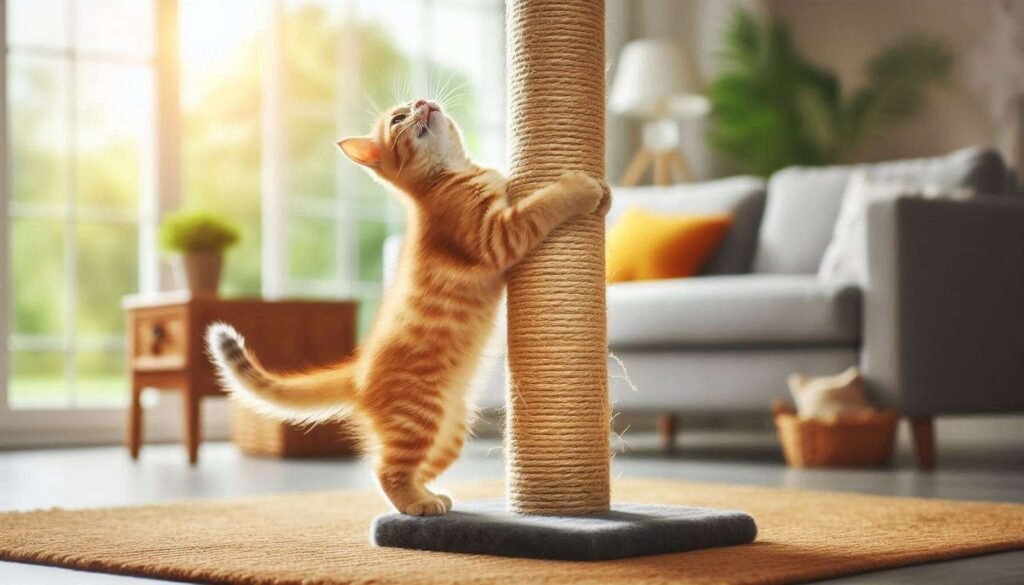
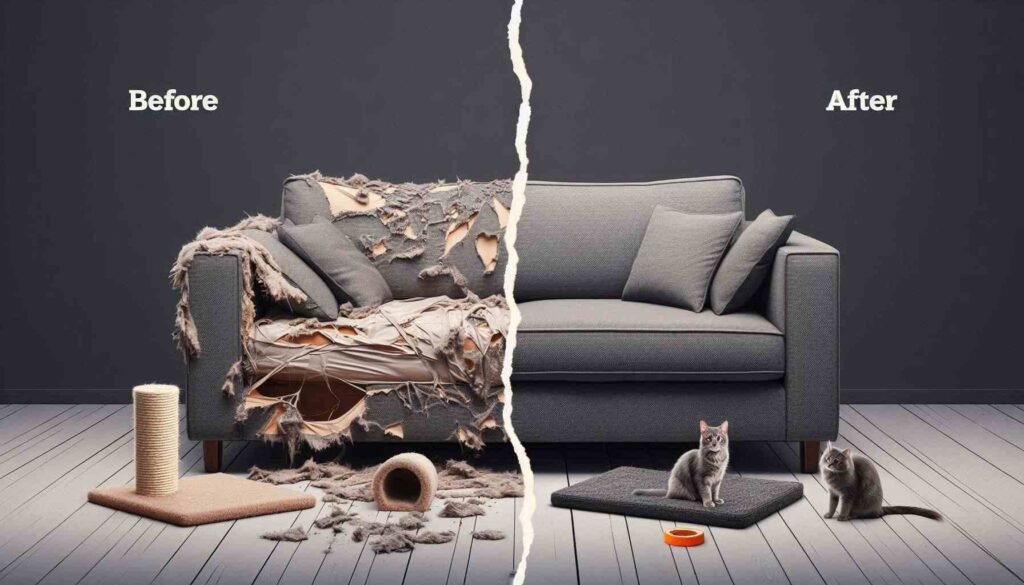
The most effective way to stop a cat from scratching furniture is to offer better alternatives. Dr. Susan Nelson, clinical professor at Kansas State University, emphasizes that providing appropriate scratching surfaces is essential.
What makes a great scratching post:
- Tall enough for full-body stretches (minimum 31 inches)
- Stable base that won’t tip over
- Right material – sisal fabric, cardboard, or real wood
- Both vertical and horizontal options
- Strategic placement near furniture where they currently scratch
Place scratching posts right next to the furniture your cat targets. This gives them an acceptable alternative in the exact spot they want to scratch.
Method 2: Use Catnip and Attractants
Make new scratchers irresistible! Sprinkle dried catnip or spray catnip solution on scratching posts. For cats who don’t respond to catnip (about 30% don’t), try silvervine—a plant that produces similar effects.
Hang toys from scratching posts and reward your cat with treats whenever they use them. Similar to clicker training techniques, positive reinforcement works wonders for redirecting cat scratching furniture behavior.
Method 3: Make Furniture Unappealing
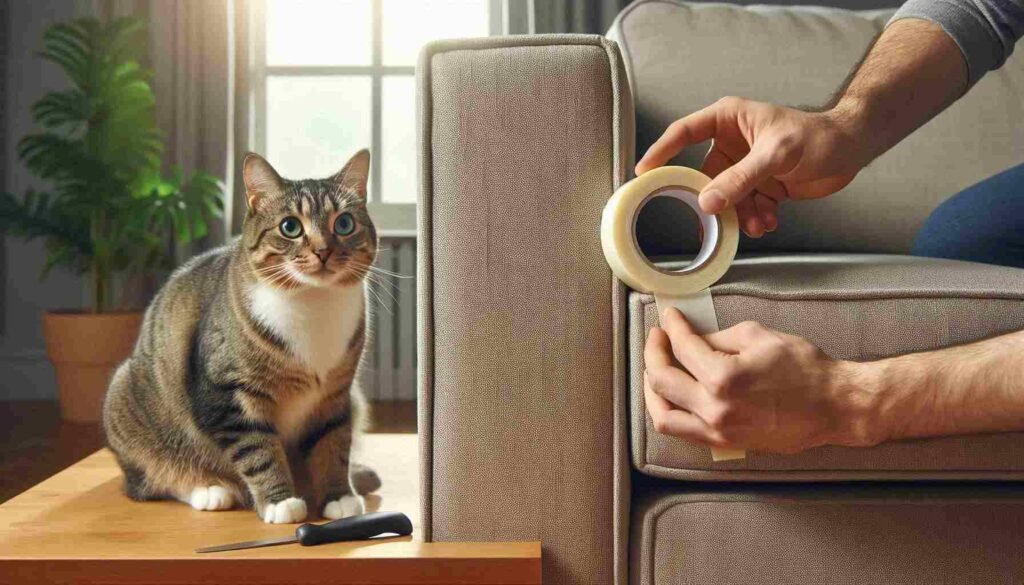
While providing better options, make your furniture less attractive for scratching.
Natural furniture protectors:
- Double-sided sticky tape – Cats hate sticky paws
- Aluminum foil – The texture and sound deter cats
- Plastic furniture covers – Physical barrier protection
- Upside-down vinyl runners – Knobby side up feels uncomfortable
Keep deterrents in place until your cat consistently uses their scratching posts.
Method 4: Apply Cat-Safe Deterrent Scents
Cats have incredibly sensitive noses. Use this to your advantage!
Effective natural scents:
- Citrus sprays – Cats dislike orange, lemon, and grapefruit
- Lavender or rosemary – Strong herbal scents cats avoid
- Apple cider vinegar solution – Diluted spray (1:3 ratio with water)
- Feliway Classic spray – Contains facial pheromones
Important: Avoid essential oils like eucalyptus and tea tree, which can be toxic to cats.
Method 5: Trim Your Cat's Nails Regular
Regular nail trims significantly reduce furniture damage from cat scratching. Shorter nails mean less destruction, even when they do scratch.
How to trim a cat’s nails safely:
- Use cat-specific nail clippers
- Trim only the sharp tip (avoid the pink quick)
- Trim every 2-3 weeks for indoor cats
Just like establishing good litter box habits early, starting nail trims young makes the process easier.
Method 6: Use Enzymatic Cleaners on Scratched Areas
Cats return to scratch areas where they’ve deposited scent pheromones. Break this cycle by thoroughly cleaning previously scratched furniture with enzyme-based cleaners that break down pheromones at the molecular level.
After cleaning, apply deterrent scents or covers to prevent the cat from scratching furniture in those spots again.
Method 7: Increase Play and Mental Stimulation
Boredom and pent-up energy often lead to destructive cat scratching furniture. According to veterinary behaviorists, cats who receive adequate physical and mental stimulation are less likely to scratch inappropriately.
Engagement strategies:
- Interactive play – 15-20 minutes twice daily
- Puzzle feeders – Make mealtime mentally stimulating
- Window perches – Bird watching provides entertainment
- Rotating toys – Keeps things interesting
Method 8: Create Multiple Scratching Zones
One scratching post isn’t enough! Provide multiple scratching options throughout your home in different textures and orientations.
Strategic scratching zones:
- Near sleeping areas – Cats love stretching after naps
- By favorite windows – High-traffic cat zones
- Near the furniture they targeted – Provides an immediate alternative
- Multiple rooms – Scratching options everywhere
Material variety: Sisal fabric, corrugated cardboard, carpet, and natural wood bark.
Method 9: Positive Reinforcement Training
Never punish a cat for scratching furniture—it’s ineffective and damages your bond. Instead, use positive reinforcement to encourage appropriate scratching.
Training steps:
- Catch them mid-scratch on furniture, gently redirect to the post
- Reward immediately when they use scratchers
- Praise enthusiastically for good scratching behavior
- Be consistent – Everyone in the household follows the same rules
Similar to how cats respond to various training methods, consistency and patience are key to stopping cat scratching furniture.
Method 10: Consider Temporary Nail Caps
For severe cases of cat scratching furniture, veterinary-approved soft nail caps (like Soft Paws) provide temporary protection while you work on training. They last 4-6 weeks and are completely harmless to cats.
Important: The ASPCA strongly opposes declawing as it’s painful, unnecessary, and doesn’t effectively solve scratching behaviors.
When Cat Scratching Furniture Indicates a Problem
While cat scratching furniture is normal, excessive scratching may signal underlying issues:
Consult your veterinarian if you notice:
- Sudden increase in scratching intensity
- Scratching accompanied by hair loss or skin damage
- Signs of anxiety (hiding, aggression, litter box issues)
- Excessive scratching despite multiple redirecting attempts
The Bottom Line: Stop Cat Scratching Furniture

You can’t eliminate cat scratching—it’s hardwired into their DNA. But you can absolutely redirect this natural cat behavior away from your furniture. The key is providing irresistible alternatives, making furniture less appealing, and rewarding appropriate scratching.
Key takeaways:
- Scratching is normal – Don’t try to stop it, redirect it
- Provide better options – Tall, sturdy posts in the right locations
- Use natural deterrents – Sticky tape, foil, citrus scents
- Trim nails regularly – Reduces damage significantly
- Never punish – Use positive reinforcement only
- Be patient – Behavior change takes time
Remember, cat scratching furniture is communication, not defiance. Your cat isn’t trying to ruin your belongings—they’re simply following their instincts. With the right approach, you can protect your furniture while keeping your cat happy and healthy.
About the Reviewer
Dr. Gary Richter, DVM, is the owner of Holistic Veterinary Care in Oakland, California, with over 20 years of experience in integrative veterinary medicine.
References & Authoritative Sources
- PetMD – How to Stop Cats From Scratching Furniture
- ASPCA – Destructive Scratching in Cats
- Chewy – How To Stop Cats From Scratching Furniture
- Small Door Veterinary – Stop Cats Scratching Furniture
- Preventive Vet – Redirect Destructive Scratching
Disclaimer: This article is for informational purposes only. Always consult with your veterinarian for specific concerns about your cat’s health or behavior.