Medically Reviewed by Dr. Amanda Foster, DVM
Last Updated: December 2025
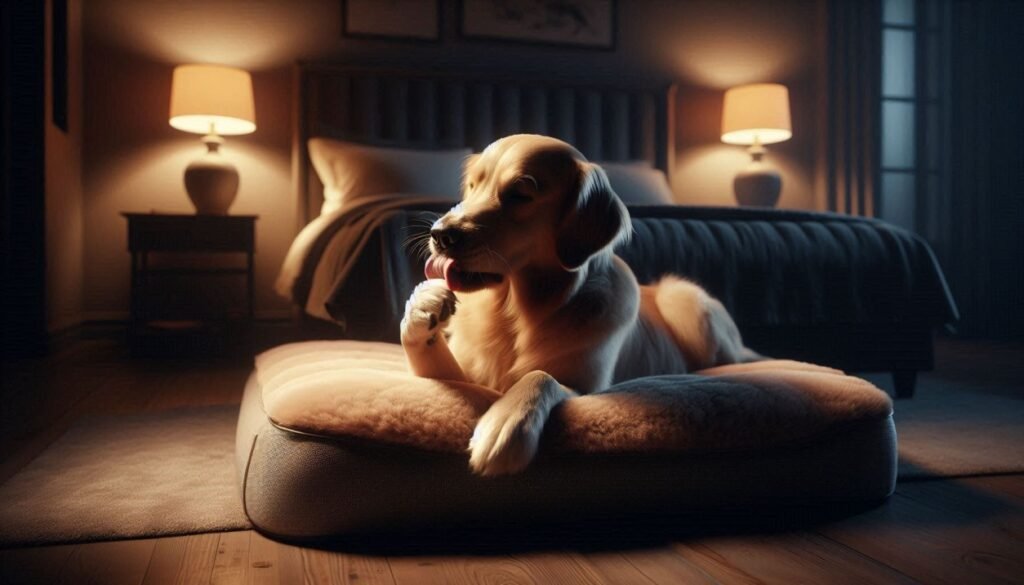
Your dog keeps licking its paws at night, and it’s driving you crazy. If your dog keeps licking paws at night, you’re probably wondering whether it’s normal grooming or something more serious. In this guide, we’ll explore why this happens, when to worry, and how to stop it.
Is It Normal When Your Dog Keeps Licking Paws at Night?
Here’s the thing—occasional paw licking is completely normal. Dogs groom themselves, just like cats do. But when your dog keeps licking paws at night to the point where it’s constant, obsessive, or causing raw skin, that’s when you’ve got a problem.
Veterinary research shows that up to 80% of a dog’s immune system lives in the gut, and poor gut health often manifests as skin issues and excessive licking. The nighttime element is significant too—when things are quiet, and your dog isn’t distracted, they focus on whatever’s bothering them.
Why Your Dog Keeps Licking Paws at Night: 6 Common Causes

1. Allergies
This is the most common reason your dog keeps licking paws at night. Dogs can be allergic to environmental allergens (pollen, grass, mold—90% of allergies are environmental), food allergens (beef, dairy, chicken), or household products.
When your dog’s exposed to allergens during the day, the itchiness intensifies at night when they’re resting. Similar to how dogs show distress through nighttime behaviors, excessive licking signals discomfort.
2. Anxiety and Stress
Just like humans, dogs use repetitive behaviors to self-soothe. Licking releases endorphins that give dogs relief from pain and anxiety. Common triggers include separation anxiety, routine changes, loud noises, and boredom. If your dog also experiences separation anxiety from their canine companions, nighttime licking might be their coping mechanism.
Real story: “My 5-year-old Australian Shepherd started licking her paws raw every night. Once we addressed her separation anxiety with training and puzzle toys, the nighttime licking stopped within two weeks.” — Karen R., Austin
3. Dry or Cracked Paws
Weather extremes and walking on rough surfaces can leave paws cracked and irritated. Your dog keeps licking paws at night, trying to moisturize the dryness, but excessive licking actually makes it worse by removing natural oils.
4. Injuries and Pain
Dogs are masters at hiding pain, but paw licking often gives them away. If your dog keeps licking paws at night, they might be dealing with cuts, thorns, broken nails, or arthritis. Constant paw licking, especially focusing on one paw, strongly suggests an injury. Just like when dogs limp after sleeping, localized licking points to a specific problem.
5. Parasites and Infections
Fleas, ticks, and mites can make your dog miserable, while bacterial or yeast infections create perfect conditions for constant licking. These usually cause a musty smell, redness, and even pus between the toes.
6. Gastrointestinal Issues
A 2012 study published in the Journal of Veterinary Behavior found connections between gastrointestinal disorders and excessive surface licking in dogs. If your dog frequently licks their paws and has poor digestion, it may indicate a larger issue.
When Your Dog Keeps Licking Paws at Night: Warning Signs

Emergency symptoms:
- Raw, bleeding paws with open sores
- Severe swelling or hot-to-touch skin
- Foul odor or discharge
- Limping or inability to walk
Schedule a vet visit if:
- Your dog keeps licking its paws at night despite home remedies
- The licking persists for more than a week
- You notice redness, inflammation, or discoloration
- One specific paw is constantly targeted
Solutions: How to Stop Your Dog from Licking Paws at Night
Step 1: Examine the Paws Thoroughly
Check paw pads for cuts, thorns, or foreign objects. Look between toes for debris or redness. Examine nails for breaks or overgrowth. Feel for heat, bumps, or swelling. Note any odor or discharge.
Step 2: Address Allergies
Immediate relief:
- Wipe paws with unscented baby wipes after walks
- Rinse paws with clean water to remove allergens
- Try a tea bath using plain Lipton tea bags
- Use pet-safe paw balm to soothe irritation
Long-term solutions:
- Consult your vet about allergy testing
- Try an elimination diet to identify food allergies
- Your vet may recommend antihistamines or special diets
Step 3: Manage Anxiety and Boredom
If stress is the culprit when your dog keeps licking paws at night:
Increase physical activity: Engage in longer walks, play sessions, and swimming. Consider age-appropriate activities based on your dog’s life stage.
Provide mental stimulation: Puzzle feeders, interactive toys, training sessions, and snuffle mats.
Create a calming bedtime routine: Quiet time before bed, gentle massage, calming supplements (vet-approved), pheromone diffusers.
Step 4: Treat Dry Skin
- Apply pet-safe paw balm daily
- Use a humidifier during dry months
- Ensure proper hydration
- Add omega-3 supplements to their diet (with vet approval)
Step 5: Break the Licking Cycle
Physical barriers:
- Use an E-collar (cone) at night
- Try dog booties or socks
- Apply bitter-tasting deterrents (pet-safe only)
Distraction techniques:
- Provide a frozen Kong stuffed with peanut butter at bedtime
- Give a safe chew toy
- Redirect attention with gentle commands
Similar to crate training strategies, consistency is key to breaking unwanted nighttime behaviors.
Step 6: Improve Overall Health
Proper nutrition tailored to your dog’s needs supports healthy skin and immune function. Feed your pet high-quality food with a balanced ratio of omega-3 and omega-6 fatty acids. Consider adding probiotics for optimal gut health, and ensure they receive an adequate intake of protein.
Step 7: Veterinary Treatment
For persistent cases where your dog keeps licking paws at night, your vet might recommend medications (antihistamines, antibiotics, antifungals, anti-anxiety meds), allergy shots, specialized prescription diets, or behavioral modification therapy.
Prevention: Keeping Your Dog's Paws Healthy
- Regular paw checks: Inspect paws weekly
- Keep nails trimmed: Long nails stress joints
- Wipe paws after walks: Remove allergens daily
- Maintain a healthy weight: Reduces joint stress
- Regular vet checkups: Catch problems early
The Bottom Line: Dog Keeps Licking Paws at Night
So, should you worry when your dog keeps licking paws at night? Here’s the summary:
Don’t panic if: It happens occasionally, there’s no visible damage, your dog stops when distracted, or it started after a particularly active day.
Do call your vet if: Your dog keeps licking paws at night obsessively, you see raw or bleeding skin, the behavior persists beyond a week, or other symptoms appear.
Remember, when your dog keeps licking paws at night, they’re trying to tell you something’s wrong. Whether it’s allergies, anxiety, pain, or infection, identifying and addressing the root cause is essential. Most cases are very treatable with proper veterinary care and home management.
Related reading: Check out our guides on unusual dog movements, cat stress after changes, and understanding feline sounds.
About the Reviewer
Dr. Amanda Foster, DVM, is a veterinarian specializing in dermatology and behavioral issues in dogs with over 12 years of clinical experience. She has treated thousands of cases of excessive licking and paw problems.
Has your dog struggled with nighttime paw licking? Share what worked for you in the comments below!
References & Authoritative Sources
- PetHelpful – 12 Reasons Why Dogs Constantly Lick Their Paws
- Creekside Pet Care – Why Dogs Lick Their Paws at Night
- PetFriendly Box – Why Dogs Lick Their Paws: 11 Causes and Solutions
- Bright Vet – Dog Licking Paws: Common Causes
- American Kennel Club – Dog Paw Care
Disclaimer: This article is for informational purposes only and is not a substitute for professional veterinary advice. Always consult with your veterinarian for specific concerns about your dog’s health or behavior.